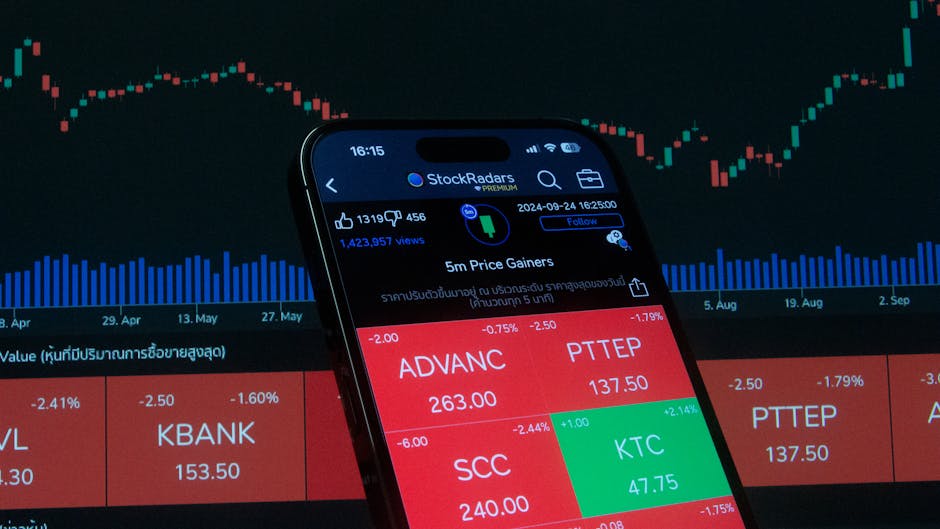
A seven model voting trading system is an ensemble approach where seven independent trading models analyze the same market data, each cast a "vote" on whether you should buy, sell, or hold, and the system aggregates those votes into a final signal. Think of it like a panel of traders in a room—if five of them say "buy" and two say "hold," you get a clear bullish lean backed by consensus.
This method cuts through noise. Single indicators are easy to fool. But when seven different mathematical models all point the same direction, the odds of a false signal drop significantly. That's the core strength of a voting system: redundancy, diversity, and majority rule.
In this guide, you'll learn what makes a seven model voting system work, which types of models fit together, and why this approach matters for traders who want repeatability without guesswork.
Why Seven Models Instead of One?
A single trading model is vulnerable. It might work great in trending markets but fail during consolidation. Or it nails reversals but whipsaws on breakouts. No single approach wins everywhere.
Related: Pre-Market Trading Explained: How to Get Started in 2026
Related: Best Trading Tool for Futures Market Hours
Related: Best Stock Market Futures Signals for Tomorrow's Trading
When you layer seven models with different personalities, you balance those blind spots. A trend-following model votes one way. A mean-reversion model votes another. A volatility model, an RSI-based model, a moving-average model, a volume model, and a price-action model each add their own perspective.
The voting system then asks: how many of these seven models agree? If six out of seven say buy, you get a strong buy signal. If only three say buy, you might skip the trade or move to a lower risk tier. You're not relying on luck or one clever formula. You're relying on convergence.
This is why VeriSignal Matrix uses a seven model voting framework—it's a way to honor the fact that markets are complex, and simple answers often fail.
The Seven Models in a Voting System
Here's what a typical ensemble might look like. Remember, the exact models vary based on your asset class and trading style, but the principle stays the same:
- Trend Model: Looks at longer-term momentum using moving averages or linear regression. Votes bullish if price is above key levels, bearish if below.
- Mean Reversion Model: Hunts for extremes. Votes for a reversal when price strays too far from its average. Great for choppy markets, terrible in strong trends without a vote from the trend model to override it.
- Volatility Model: Tracks whether the market is calm or panicked. Adjusts position sizing and trade confidence based on volatility bands or ATR.
- RSI/Momentum Model: Uses overbought/oversold zones to vote. When RSI is above 70, it might vote sell. When below 30, vote buy. Simple but effective as one voice in the chorus.
- Volume Model: Checks if price moves are backed by conviction. A breakout with low volume gets a weaker vote than one with heavy volume.
- Price Action Model: Reads candle patterns, support/resistance, and breakout structure. Votes based on pure market structure, no calculations.
- Correlation or Macro Model: For stocks or indices, might track related assets or sector strength. For crypto, could track Bitcoin dominance or funding rates. Adds a market-context vote.
Not all seven are equally heavy. Some systems weight them equally. Others give more voting power to the model with the highest historical win rate on that specific asset. The key is that you get seven independent data streams feeding into one decision.
How Voting Aggregation Works
Once the seven models cast their votes, the system counts them up. The most common rule is simple majority:
- 5+ votes for buy = strong buy signal
- 4 votes for buy, 3 for hold = moderate buy
- 3 votes for buy, 4 for hold/sell = weak or no signal
- 5+ votes for sell = strong sell signal
Some systems use weighted voting instead. The volume model might count as 1.5 votes if it has proven more reliable. The trend model might count as 2.0 votes on daily timeframes. Weighting lets you bend the system toward models that work best for your specific market.
You'll also set a confidence threshold. You might ignore all signals below 60% model agreement. Or you only trade strong signals where 6 or 7 models agree. This threshold becomes your filter for noise.
With VeriSignal Matrix, the voting happens automatically. You see the final signal with its confidence level, entry price, take-profit target, and stop-loss already calculated. You stay in command—execution is optional and defaults to notify-only mode so you can review every trade before you take it.
Entry, Exit, and Position Sizing

A seven model voting system gives you the signal, but a complete trading system needs three more pieces:
Related: Best Broker-Independent Trading Signal Services 2026: Top 5 Ranked
Related: Best Crude Oil Futures Trading 2026: Top 5 Tools Ranked
Related: Best S&P Futures Trading Signals 2026: Top 5 Platforms Ranked
Entry: Where do you get in? Most systems use the vote itself. If you get a buy signal, your entry might be the next open, or a limit order just above the current price. Some systems vary entry aggressiveness based on how strong the vote is. A 7-out-of-7 signal might enter immediately; a 4-out-of-7 might wait for a pullback.
Exit for Winners: Your take-profit is critical. Common methods include a fixed risk-reward ratio (if your stop is 2% below, your profit target is 4% above), a trailing stop that locks in gains as price moves higher, or a level derived from technical support and resistance. The voting system shouldn't change your exits—your exits should be consistent and pre-defined.
Exit for Losers: Your stop-loss is non-negotiable. Most traders set this just below the entry price or below the nearest support that the price action model identified. Hard stops protect you when the seven models get it wrong, which they will sometimes.
Position Sizing: This is where confidence matters. A high-confidence signal (6+ models agreeing) might warrant a full-size position. A weak signal (4 models) might be half-size or skipped entirely. Volatility also scales position size—if the market is in a panic and ATR is double normal, you shrink your size to keep risk constant.
When a Seven Model Voting System Works Best
This approach shines when:
- You're trading an asset with reliable, repeatable patterns (stocks, major indices, established crypto pairs, liquid forex).
- You have enough historical data to test and validate each model in your ensemble.
- You're willing to ignore a trade if the models don't agree, rather than forcing a signal when conviction is weak.
- You want to reduce emotional decision-making by trusting a systematic framework.
It struggles when:
- You trade illiquid or brand-new assets where historical patterns don't hold.
- You need a signal on every single candle (voting systems will skip many trades, which is actually healthy for your win rate).
- You're overconfident that your models are right. (They're not. Markets evolve. Your models will underperform sometimes.)
Start by testing on paper, using a simulator or the dry-run mode offered by VeriSignal Matrix. See how the voting system performs on your chosen markets and timeframes before risking real capital.
Building Your Own vs. Using a Service
You can build a seven model voting system from scratch using Python, Pinescript, or another backtesting tool. That takes time and coding skills.
Or you can adopt a pre-built system that handles the engineering for you. The advantage of a service is that someone else has already done the heavy lifting: model design, voting logic, backtesting, and real-time signal generation. Your job is to understand the framework, trust the process, and manage risk by respecting stop-losses and position sizing rules.
Either way, remember that past performance is not future performance. A system that worked beautifully for the last two years might struggle next year if markets shift. That's why you monitor your results, adjust when needed, and never let any signal—no matter how high-confidence—override proper risk management.
If you want to explore a pre-built voting system without building your own, VeriSignal Matrix analyzes multiple asset classes and delivers voting-consensus signals with clear entry and exit levels. You connect only when you're ready to trade live, and you stay in control the entire time.
Key Takeaways
A seven model voting trading system takes seven independent trading models, each casting a vote on buy, sell, or hold, and aggregates those votes into a single recommendation. The consensus approach cuts false signals and adds robustness to your decision-making.
The seven models typically cover trend, mean reversion, volatility, momentum, volume, price action, and macro or correlation context. They vote on the same data but from completely different angles, so when six or seven of them agree, you get genuine confidence.
Always pair voting signals with defined entry points, pre-set take-profit levels, hard stop-losses, and dynamic position sizing. The voting system is the signal generator, but the complete system—entry, exit, sizing, and risk—is what separates winners from losers.
Test everything on paper first. Trade small when you go live. Respect your exits. And remember that no system wins forever. Markets change, and your job is to adapt intelligently while the system does its job of finding repeatable setups.
How do I know if a voting signal is reliable?
Check two things: how many of the seven models agree (higher agreement = higher confidence) and how the system performed on that same signal in historical backtests. A 6-or-7 out of 7 vote on an asset that backtested well is far more reliable than a 4-out-of-7 vote. Ignore signals below your confidence threshold, even if they seem obvious.
Can I use a seven model voting system on any timeframe?
Yes, but you need to rebuild or recalibrate the models for each timeframe you trade. A trend model that works on daily charts might need different moving average lengths on hourly charts. Volume and volatility thresholds also change. Test each model on your target timeframe before trusting its vote.
What if only three models vote buy and four vote hold or sell?
You skip the trade. A weak vote is worse than no vote. Many traders feel FOMO and force trades on weak signals, which destroys the edge. Discipline means saying "not enough conviction" and waiting for the next setup where six or seven models agree.
Do I need to code a seven model voting system myself?
Not necessarily. You can backtest and build one with programming, or you can use a service that has already engineered the voting logic and handles real-time signal generation. Either way, you still need to understand how the models work and manage your risk through proper position sizing and stops.