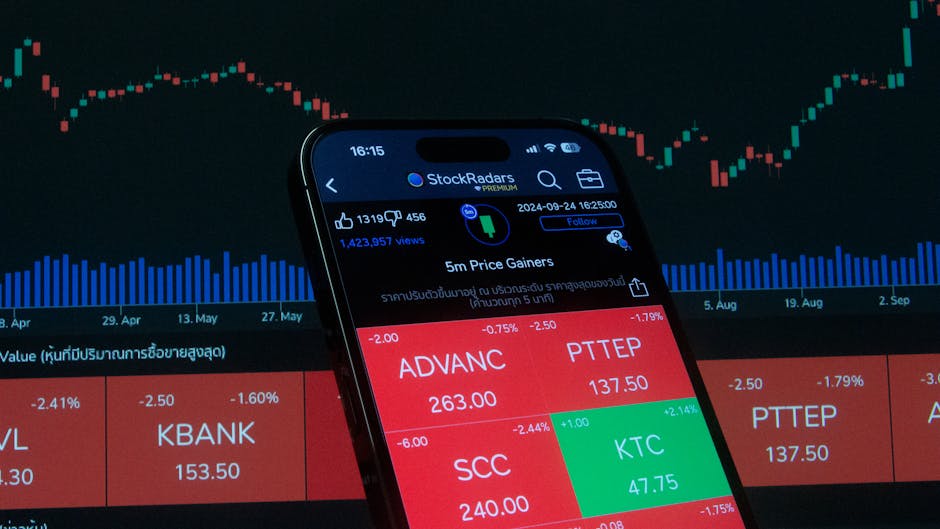
Pre-market trading is your chance to act on market-moving news before everyone else. It happens before regular stock market hours, letting you jump on earnings reports, overnight developments, and economic announcements while most traders are still asleep.
If you've ever wondered why a stock gaps up or down at the open, pre-market trading is often the reason. Smart traders use these early hours to position themselves ahead of the crowd.
Related: Best Trading Tool for Futures Market Hours
Related: Best Crude Oil Futures Trading 2026: Top 5 Tools Ranked
Related: Best S&P Futures Trading Signals 2026: Top 5 Platforms Ranked
Here's everything you need to understand about pre-market trading and how to use it as part of your strategy.
What Is Pre-Market Trading?
Pre-market trading happens before the regular stock market opens at 9:30 AM Eastern Time. In the US, this typically runs from 4:00 AM to 9:30 AM, though exact hours vary by broker.
During these hours, you can trade stocks, ETFs, and some options. You won't trade on the main exchange yet. Instead, you're trading on electronic communication networks (ECNs), which match buyers and sellers outside official market hours.
The big advantage? You can react to news that broke overnight. A company announced earnings after the close? A geopolitical event happened? Economic data came in hotter than expected? You're already positioned before the market officially opens.
Related: After Hours Trading: What You Need to Know in 2026
Why Traders Use Pre-Market Hours
Speed is everything in trading. VeriSignal Matrix and other serious trading tools exist precisely because the first mover advantage matters.
Pre-market gives you that advantage. Here's what you can accomplish:
- React to overnight earnings announcements before the open
- Position yourself before economic data hits at 8:30 AM
- Catch early momentum on breaking news
- Set orders that execute as soon as the regular session starts
- Avoid the chaos and high volatility of the market open
Many institutional traders and hedge funds are already active in pre-market hours. Retail traders who ignore this window are often playing catch-up.
Market Indicators: Reading Pre-Market Signals
Before the regular market opens, futures contracts tell you which direction stocks are likely headed. These are the most important indicators to watch:
- S&P 500 Futures (ES): Shows where the broad market is headed
- Nasdaq-100 Futures (NQ): Signals tech stock movement
- Dow Jones Futures (YM): Indicates large-cap blue-chip direction
Futures give you an implied open value. This tells you roughly where major indices will open. If S&P 500 futures are up 0.5%, expect the market to open higher.
Individual stocks also move in pre-market based on earnings, news, and sector rotation. A tech stock might be up 5% in pre-market if it beat earnings, but that doesn't guarantee it holds those gains at the open.
What You Need to Trade Pre-Market
Not every broker lets you trade during pre-market hours. You'll need:
- A brokerage account that offers pre-market access
- Advanced trading software with real-time data
- Enough capital to meet any account minimums (varies by broker)
- An understanding of the risks involved
Most major brokers support pre-market trading, but the quality of execution varies. Thin liquidity means wider bid-ask spreads. Order fills can be slower. You might not get the exact price you want.
This is why execution quality matters. You need a platform that routes orders efficiently and gives you transparent information about what's actually happening.
The Risks You Need to Know
Pre-market trading looks tempting, but it comes with real dangers. Don't jump in blind.
Lower liquidity: Fewer buyers and sellers means your order might not fill, or you might get a worse price than expected.
Wider spreads: The gap between bid and ask prices is often 2-3x larger in pre-market. You lose money instantly on entry.
Wild volatility: With fewer shares trading, prices can swing violently on small orders. A single buyer or seller can move a stock 5-10%.
No stop-loss protection: Your stop-loss order might not execute at your limit in pre-market conditions. You could face bigger losses than expected.
News surprises: Markets react unpredictably to overnight announcements. Earnings can crush a stock despite good numbers, or vice versa.
This is why having clear, pre-calculated entry and exit levels is critical. You need to know your stop-loss and take-profit targets before you enter, not after.
How to Approach Pre-Market Trading Strategically
If you want to trade pre-market, treat it like any other trading session. Have a plan.
1. Check the news the night before: Set alerts for after-hours earnings, economic data, and breaking developments. Know what might move before you wake up.
2. Look at futures: Before the open, check where S&P, Nasdaq, and Dow futures are pointing. This sets the overall tone.
3. Identify key levels: Know support and resistance for any stock you want to trade. What price would signal a breakout? Where would you bail if wrong?
4. Plan your entry and exit: Decide your buy price, stop-loss, and take-profit before you enter. Don't wing it.
5. Test with smaller size: Pre-market is more unpredictable than regular hours. Trade smaller to account for wider spreads and lower liquidity.
6. Monitor execution closely: Watch your order fills carefully. In thin markets, you might not get what you expected.
Tools like VeriSignal Matrix can help by analyzing market data across multiple timeframes and asset classes, giving you clearer signals before you commit capital.
Common Pre-Market Trading Mistakes
Most new pre-market traders lose money because they skip the fundamentals.
Chasing gaps: A stock gaps up 10% on earnings? Don't chase it at the top. Wait for a pullback or skip it entirely. The first move often reverses.
Ignoring liquidity: Just because a stock is available doesn't mean you can fill your order. Check volume. If only 100 shares have traded, your order for 500 shares might not execute.
No stop-loss: This is the killer mistake. You think you'll exit if it goes wrong. Pre-market volatility happens fast. You lose 20% before you realize what happened. Always set a hard stop.
Trading too big: Tight pre-market conditions don't forgive large positions. You'll get slipped on entry and exit. Smaller size = less damage.
Ignoring overall market direction: If futures are down 1%, shorting individual stocks is easier than fighting the tape by going long. Trade with the flow, not against it.
Building a Pre-Market Routine
Successful pre-market traders wake up early and have a system. They don't just randomly pick stocks.
Your routine should look like this:
- Check futures and economic calendar 30 minutes before pre-market opens
- Review overnight news and earnings reports
- Scan for stocks moving on significant volume (real interest, not noise)
- Identify setups that match your strategy
- Plan entries, stops, and exits before you place a single order
- Keep a trading journal to track what worked and what didn't
Discipline beats speed. You're not trying to catch every move. You're waiting for setups that meet your criteria.
Many traders find that combining pre-market awareness with a platform that provides clear trading signals helps keep emotions out of the equation. That's where systems like VeriSignal Matrix add value: they analyze the data so you can focus on execution and risk management.
Pre-Market vs. Regular Market Trading
The same strategies work in both sessions, but the conditions are different.
Pre-market: Lower volume, wider spreads, more volatility, fewer participants, better news reaction, bigger gaps.
Regular hours: Higher volume, tighter spreads, more stable pricing, easier fills, better liquidity, institutional participation.
Most beginners should stick to regular market hours until they understand how trading works. Pre-market is for traders who specifically want early advantage and understand the risks.
If you do trade pre-market, accept that you'll get worse execution than during the regular session. Price that into your risk calculations.
Tools and Data You Need
Pre-market trading demands real-time data and fast execution. Don't cheap out on your platform.
You need:
- Live pre-market quotes updated second-by-second
- Futures data showing market direction
- Economic calendar alerts for major data releases
- News feeds that cover earnings and breaking events
- Order routing that supports multiple execution options
- Clear entry and exit signals based on multiple data points
A solid platform will give you entry, take-profit, and stop-loss levels calculated from current market conditions. This removes guesswork and keeps you disciplined.
FAQ: Your Pre-Market Questions Answered
Can I make money trading pre-market?
Yes, but most retail traders lose money. The combination of lower liquidity, wider spreads, and high volatility creates a hostile environment. Success requires discipline, a tested strategy, proper risk management, and a deep understanding of how thin markets work. Don't expect to profit until you've spent significant time learning.
What's the best pre-market trading strategy?
There's no single "best" strategy. It depends on your style. Some traders focus on earnings reactions, some on technical breakouts, some on sector rotation based on futures direction. Start by identifying what moves you can actually predict, then build a system around that. Track your results in a journal. Most traders find that reactive strategies (responding to news) work better than predictive ones in pre-market.
How much money do I need to start pre-market trading?
Your broker sets the minimum. Some allow smaller accounts for longer-term positions. Check your broker's specific rules. Also remember that account size should match your strategy. Trading 500-share positions requires a larger cushion than 50-share positions.
Why do stocks gap up or down at the open?
Pre-market trading causes gaps. If earnings were announced after the close, traders reacted overnight in pre-market hours. The opening price reflects all that overnight activity. Futures also play a role: if the market indices rallied overnight on international news, that lifts all stocks at the open.